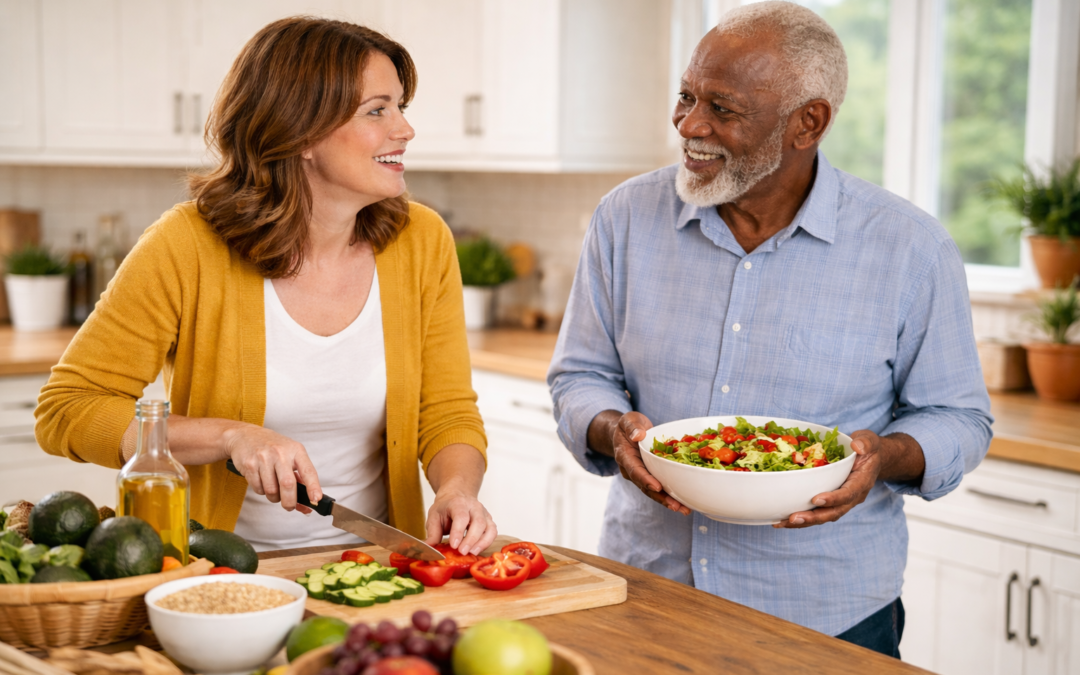
Nutrition and Aging at Home are essential for seniors who want to maintain health, energy, and independence. Aging at home allows older adults to remain in a familiar environment, maintain their routines, and preserve a sense of independence that greatly contributes to overall well-being.
For many families and professionals supporting older adults, the focus often centers on medical care, mobility, and safety. While these are essential aspects of aging in place, one foundational element is sometimes overlooked: nutrition.
The foods we eat and the fluids we drink play a powerful role in how we feel, heal, and function each day. For older adults, proper nutrition and hydration can directly influence energy levels, cognitive health, recovery from illness, and the ability to maintain independence. When meals are balanced and routines are supported, aging at home becomes more sustainable and enjoyable.
For many families, maintaining proper nutrition becomes easier when older adults receive
personalized home care support that helps with meal preparation, grocery shopping, and daily routines. These everyday supports ensure that older adults not only eat regularly but also enjoy meals that nourish both body and mind.
Why Nutrition and Aging at Home Matter More as We Age
As the body ages, nutritional needs evolve. Metabolism naturally slows, muscle mass decreases, and certain medications or health conditions may affect appetite or digestion. At the same time, the body often requires more specific nutrients to maintain strength, immunity, and cognitive health.
Balanced nutrition helps support several key areas of healthy aging.
- Strength and Mobility: Maintaining muscle mass becomes increasingly important as we age. Meals rich in protein, healthy fats, and nutrient-dense vegetables help support muscle strength, which plays a critical role in stability and fall prevention. Older adults who maintain proper nutrition often experience better mobility and greater confidence moving around their homes.
- Recovery and Healing: Nutrition also plays an important role in recovery from illness, surgery, or hospitalization. Protein, vitamins, and minerals help the body repair tissue and rebuild strength. For older adults recovering from medical procedures or health setbacks, proper nutrition can support a smoother and faster recovery process.
- Cognitive Health: The brain depends on adequate nutrition and hydration to function properly. Diets rich in antioxidants, omega-3 fatty acids, and whole foods may help support memory, focus, and long-term brain health.
According to the healthy eating guidance for older adults from the National Institute on Aging, balanced meals that include fruits, vegetables, lean proteins, and whole grains help support both physical and cognitive wellness throughout the aging process.
The Hidden Risk: Malnutrition in Older Adults
Malnutrition among older adults is more common than many people realize. It doesn’t always mean someone isn’t eating enough food; sometimes it means they are not receiving the right nutrients their body needs to stay healthy.
A variety of factors can contribute to poor nutrition.
Some older adults experience changes in taste or appetite. Others may have difficulty grocery shopping, cooking meals, or remembering to eat regularly. Medication side effects, dental challenges, mobility limitations, and social isolation can all play a role.
Over time, these challenges may lead to skipped meals or reliance on quick, less nutritious foods.
When nutrition declines, it can have serious consequences. Poor nutrition can lead to fatigue, increased fall risk, weakened immune function, and slower recovery from illness. It may also contribute to cognitive changes and decreased overall quality of life.
Having assistance with meals and support with daily living activities can help prevent malnutrition and ensure older adults maintain consistent eating habits that support their health.
Hydration: A Simple Habit with a Big Impact
While nutrition is often the focus of health discussions, hydration is just as important for older adults.
As we age, the body’s natural thirst signals may weaken, meaning many older adults do not feel thirsty even when they need fluids. This can make dehydration more common than many people expect.
Even mild dehydration can cause dizziness, fatigue, confusion, headaches, and an increased risk of falls. In more severe cases, dehydration can contribute to urinary tract infections or hospitalizations.
Encouraging regular fluid intake throughout the day is one of the simplest ways to support health and independence.
Helpful hydration strategies include:
-
Keeping water easily accessible throughout the home
-
Offering herbal teas or flavored water
-
Incorporating hydrating foods like fruits, vegetables, and soups
-
Encouraging small, frequent sips throughout the day
Proper hydration is a simple but powerful part of
aging safely at home and maintaining overall wellness.
The Role of Routine in Healthy Eating
Routine plays an important role in helping older adults maintain proper nutrition. Consistent meal times and daily habits can help ensure meals and hydration remain a regular part of each day.
Regular routines provide structure, which can support both physical health and emotional well-being.
- Predictable Meal Times: Eating meals at consistent times each day helps regulate appetite and digestion. When meals become part of a daily rhythm, older adults are less likely to skip meals or forget to eat.
- Balanced Meal Planning: Planning meals ahead of time helps ensure a balance of nutrients. Meals that include protein, vegetables, whole grains, and healthy fats can provide steady energy throughout the day.
- Energy Stability: Regular meals prevent sudden drops in blood sugar that may lead to fatigue, confusion, or weakness.
- Many families turn to home care for seniors to help establish daily routines that support healthy meals, hydration, and overall well-being.
How Caregivers Support Healthy Nutrition at Home
Balancing work, caregiving responsibilities, and daily life can make it challenging for families to consistently support meal preparation and grocery shopping. Professional caregivers often play a valuable role in helping older adults maintain healthy routines.
Through companion care services, caregivers can assist with many daily tasks that support nutrition and hydration.
- Meal Preparation: Preparing meals can become difficult due to fatigue, arthritis, or mobility limitations. Caregivers can assist with preparing simple, nutritious meals that align with dietary needs.
- This might include cooking fresh meals, preparing ingredients for the week, or assisting with specialized diets recommended by healthcare providers.
- Grocery Shopping Support: Caregivers can also help with grocery shopping and kitchen organization, ensuring that healthy ingredients are always available. When the refrigerator and pantry are well stocked, older adults are more likely to maintain balanced eating habits.
- Encouraging Hydration: Caregivers can gently remind and encourage older adults to drink fluids throughout the day. Offering beverages during meals and snacks helps maintain hydration without making it feel like a chore.
- Companionship During Meals: For many older adults, meals become more enjoyable when they are shared with someone. Caregivers provide companionship that turns meals into social moments, which can help increase appetite and improve overall well-being.
- Nutrition as Part of a Larger Care Plan: For social workers, case managers, and community programs supporting aging adults, nutrition is a critical part of a holistic care plan. Proper nutrition helps support recovery, prevent hospital readmissions, and maintain independence.
When older adults receive support with meals, hydration, and daily routines, they often experience better health outcomes and greater stability at home.
Additional research and guidance on nutrition and aging can be found through the
nutrition tips for healthy aging provided by the Academy of Nutrition and Dietetics.
Collaborative care between families, healthcare professionals, and caregivers helps ensure that older adults receive the daily support they need to stay safe and healthy.
Supporting Independence Through Everyday Care
Aging at home is about more than remaining in a familiar place—it’s about maintaining dignity, independence, and quality of life.
Proper nutrition and hydration are essential pieces of that independence. When older adults have support with meal preparation, grocery shopping, and daily routines, they often experience greater energy, improved stability, and better overall health.
Even small supports can make a meaningful difference.
Establishing regular meal times, keeping healthy snacks within reach, and encouraging hydration can all contribute to healthier daily habits.
For families navigating the challenges of supporting a loved one at home, compassionate care can help bridge the gap. To learn how caregivers can help support healthy routines and daily independence,
learn more about our home care services.
With the right support, older adults can continue to enjoy the comfort of home while maintaining the health, energy, and independence that allow them to live life fully.
…….
…….
……
At
Family First Home Companions, our goal is to partner with families to deliver compassionate, personalized care that fosters independence. Whether your loved one needs occasional companionship, post-hospital support, or full-time live-in care, we are here to help.
At Family First Home Companions of Long Island, NY our mission is to provide an outstanding
home care service that is professional and personalized. We diligently hire attentive, qualified staff to meet each client’s unique needs and do so with compassion and integrity. It is an honor and a privilege to help seniors at home to maintain their independence and quality of life in Long Island, NY. If you or a senior loved one needs help with daily activities such as, meal preparation, household chores, errands, transportation, guidance and supervision for safety at home, please call
Family First Home Companions at 631-319-3961. We proudly serve seniors at home in
Albertson,
Amityville,
Babylon,
Baldwin,
Bayport,
Bay Shore,
Bayville,
Bellerose Terrace,
Bellmore,
Bellport,
Bethpage,
Blue Point,
Bohemia,
Brentwood,
Brightwaters,
Brookhaven,
Brookville,
Calverton,
Carle Place,
Cedarhurst,
Center Moriches,
Centereach, Centerport,
Central Islip,
Cold Spring Harbor,
Commack,
Copiague,
Coram, Deer Park, Dix Hills,
East Islip,
East Marion,
East Meadow,
East Moriches,
East Northport,
East Norwich,
East Patchogue,
East Quogue,
East Rockaway,
East Setauket,
Eastport,
Elmont,
Elwood,
Farmingdale,
Farmingville,
Floral Park,
Franklin Square,
Freeport,
Garden City,
Glen Head Glenwood Landing,
Great Neck,
Great River,
Greenlawn,
Greenvale,
Hampton Bays,
Hauppauge,
Hempstead,
Hewlett, Hicksville,
Holbrook,
Holtsville,
Huntington,
Huntington Station,
Inwood,
Island Park,
Islandia, Islip,
Islip Terrace, Jamesport, Jericho, Kings Park, Kings Point,
Lake Grove,
Lawrence,
Levittown,
Lindenhurst,
Lloyd Harbor,
Locust Valley,
Lynbrook, Malverne,
Manhasset,
Manorville,
Massapequa,
Massapequa Park,
Mastic,
Mastic Beach,
Medford,
Melville,
Merrick,
Middle Island,
Mill Neck,
Miller Place,
Mineola,
Moriches,
Mount Sinai, Nesconset,
New Hyde Park,
North Amityville,
North Babylon,
North Lynbrook,
North New Hyde Park,
North Patchogue,
North Valley Stream,
North Woodmere,
Northport, Oakdale,
Oceanside,
Old Bethpage,
Old Westbury,
Oyster Bay, Patchogue,
Plainview,
Port Jefferson,
Port Jefferson Station,
Port Washington, Quogue, ,
Ridge,
Riverhead,
Rockville Centre,
Rocky Point,
Ronkonkoma,
Roosevelt,
Roslyn,
Roslyn Heights,
Saint James,
Sands Point,
ɟ,
Sea Cliff,
Seaford,
Selden,
Shirley,
Shoreham,
Smithtown,
Sound Beach,
South Hempstead,
Southampton,
Stony Brook,
Syosset, Uniondale, Upton, Valley Stream,
Wading River,
Wantagh,
West Babylon,
West Hempstead,
West Islip,
West Sayville,
Westbury,
Westhampton,
Westhampton Beach,
Williston Park,
Woodbury,
Woodmere,
Wyandanch, Yaphank