
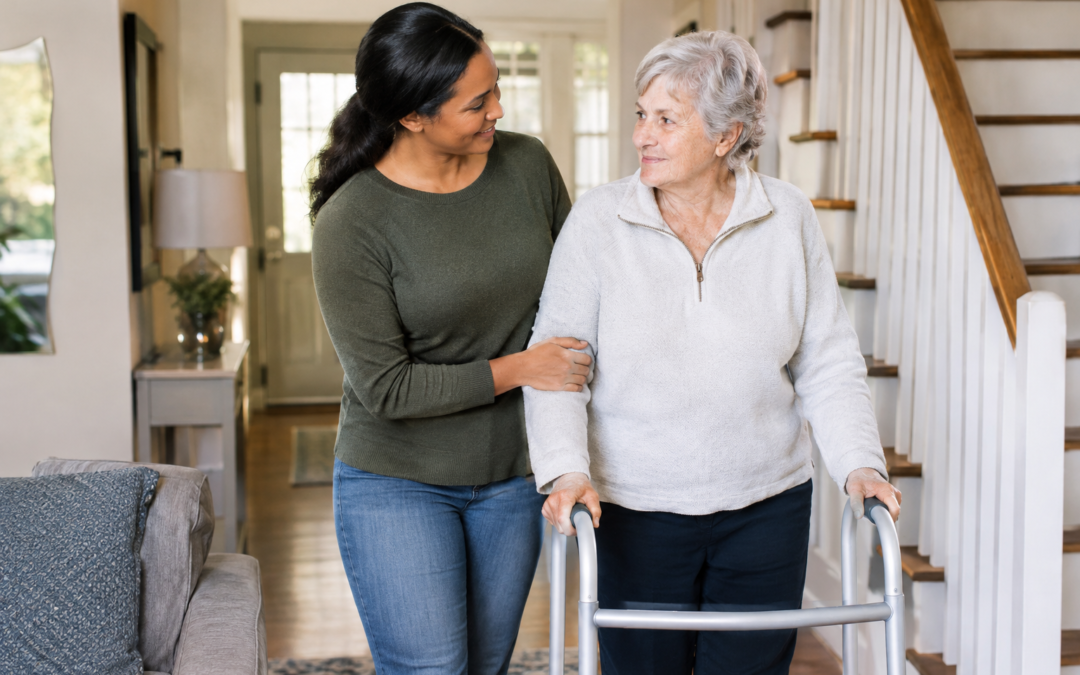
Fall is a beautiful time of year. The weather cools down, families settle back into their routines, and the busy pace of summer starts to slow. But for older adults, the transition into fall can also bring changes that families may not immediately notice.
Shorter days mean less natural light. Cooler temperatures can make outdoor activity less appealing. Summer fatigue or reduced activity may have already affected strength and balance. Add changes in routine, medications, vision, or mobility, and the risk of a fall can increase quickly.
That is why fall prevention should be a priority before fall actually happens.
Falls are not simply an unfortunate part of getting older. According to the Centers for Disease Control and Prevention (CDC), falls are the leading cause of injury among adults age 65 and older, and more than one in four older adults report falling each year.
For families and social workers, this is an important reminder: preventing a fall is often much easier than helping an older adult recover after one.
Why Fall Risk Can Increase as the Seasons Change
Seasonal changes may seem harmless, but they can affect an older adult’s daily routine in several ways.
During the summer, an older adult may have spent more time indoors because of heat or humidity. Maybe they stopped taking their usual walks or became less active. Over time, that decrease in movement can contribute to muscle weakness and reduced balance.
When fall arrives, those changes can become more noticeable.
An older adult who was comfortably walking around the house a few months ago may now be moving more slowly. They may need to hold onto furniture when getting up, take longer to climb stairs, or become less confident walking outside.
These changes should not simply be dismissed as “getting older.”
They may be early warning signs that additional support is needed.
Families should pay attention to changes such as:
- Holding onto walls or furniture while walking
- Shuffling the feet
- Difficulty getting up from a chair
- Avoiding stairs
- Becoming hesitant when walking outside
- Increased fatigue during everyday activities
- New complaints about dizziness or weakness
- Forgetting to use a cane or walker
- Previous falls or near-falls
A near-fall is worth paying attention to, too. Just because someone caught themselves before hitting the ground does not mean the risk is gone.
The Home Can Either Reduce Risk or Add to It
One of the best places to begin fall prevention is right at home.
Many fall hazards are surprisingly ordinary. A loose throw rug. A cluttered hallway. A dim staircase. Shoes that do not fit properly. A bathroom without adequate support.
These are the types of things that can easily be overlooked until someone actually falls.
The CDC recommends making the home safer by removing things that could cause someone to trip, improving lighting, adding grab bars in appropriate areas, and making sure stairs have secure railings.
Families can walk through the home and ask a simple question:
“If my loved one were having a weaker or unsteady day, would this space still be safe?”
Look carefully at:
Hallways and Walkways
Keep pathways clear of boxes, shoes, electrical cords, small furniture, and other objects. Avoid placing frequently used items somewhere that requires reaching, stretching, or climbing.
Bathrooms
Bathrooms deserve special attention because slippery surfaces and transfers can create significant fall risks. Grab bars, appropriate shower support, nonslip surfaces, and supervision when needed can make a meaningful difference.
Stairs
Make sure stairs are well lit and free of clutter. Handrails should be secure and easy to use. If an older adult is becoming increasingly uncomfortable using stairs, that change should be discussed rather than ignored.
Bedrooms
Make sure there is enough lighting for nighttime trips to the bathroom. A clear path from the bed to the bathroom can make those middle-of-the-night walks safer.
For additional ideas, families can also read our guide on simple home modifications that make aging in place easier.
Supervision Can Make a Difference
Home safety modifications are important, but sometimes they are not enough.
An older adult may know that they should use their walker but still forget. They may know that the stairs are difficult but attempt to carry laundry upstairs anyway. Someone experiencing memory loss may not recognize a familiar hazard at all.
This is where appropriate supervision becomes an important part of fall prevention.
Having another person nearby can provide gentle reminders and assistance when needed. A caregiver can help with walking, navigating stairs, getting in and out of the shower, or completing everyday activities that have become more difficult.
It does not mean taking away someone’s independence.
In fact, the right support can help an older adult maintain independence by allowing them to continue doing the things they enjoy while reducing unnecessary risks.
At Family First Home Companions, our fall prevention services include support with walking, stairs, shower supervision, activity, and other everyday tasks that can become more challenging as mobility changes.
Mobility Decline Should Be Addressed Early
One of the biggest mistakes families can make is waiting until mobility has declined significantly before taking action.
If a parent is becoming weaker, less steady, or more hesitant to move around, early intervention may help prevent a much bigger problem later.
The CDC’s STEADI program recommends looking at several factors when assessing fall risk, including gait, strength, balance, medications, vision, footwear, and hazards within the home.
That means fall prevention is not just about putting down a nonslip mat.
It is about looking at the whole picture.
Has your loved one’s walking changed?
Are they taking a medication that may cause dizziness or drowsiness?
Have they had their vision checked recently?
Are they getting enough physical activity?
Are they having trouble getting up from a chair?
These questions can help families identify concerns before they turn into an emergency.
Don’t Overlook Vision and Medications
Sometimes the reason an older adult is becoming unsteady is not immediately obvious.
Vision changes can make it harder to see steps, uneven surfaces, or objects in the walkway. The CDC recommends that older adults have their eyes checked regularly and keep their prescriptions updated.
Medications can also play a role. Certain medications may cause dizziness, sleepiness, changes in balance, or other side effects that increase fall risk. Families should never stop or change a medication on their own, but they can ask a doctor or pharmacist to review the medication list.
For social workers and other professionals working with older adults, these conversations can be an important part of identifying risk early.
Social Workers Have an Important Role in Fall Prevention
For social workers, fall prevention is often connected to much more than physical safety.
A fall can affect housing, family dynamics, independence, finances, transportation, and the ability to remain safely at home.
When a client or family member reports a fall, it can be an opportunity to look beyond the immediate incident.
What happened before the fall?
Was the person alone?
Had they been feeling weaker?
Was the home environment contributing?
Did they have appropriate support?
Has the family noticed other changes?
The answers may reveal needs that were developing well before the fall occurred.
Early communication between families, social workers, healthcare providers, and caregivers can help create a more complete picture of what an older adult needs to remain safe.
The CDC’s STEADI resources emphasize identifying risk factors and developing individualized interventions rather than taking a one-size-fits-all approach.
Early Support Can Help Prevent Emergency Situations
A fall can quickly turn into an emergency room visit, hospitalization, rehabilitation, and a long recovery.
Hip fractures are one particularly serious consequence. The CDC reports that there are approximately 300,000 hip fracture-related hospitalizations each year among older adults, and falls account for the majority of these injuries.
But the impact is not only physical.
After a fall, an older adult may become afraid of falling again. They may stop walking as much, become less active, and lose additional strength. That can create a cycle where fear leads to inactivity, inactivity leads to weakness, and weakness increases the risk of another fall.
That is why prevention matters.
A few hours of support each week may help someone remain active and safe. In other situations, an older adult may need more consistent supervision.
Hourly care can provide families with flexible support when a loved one needs assistance during certain parts of the day. For someone who requires more continuous support, other care options may be appropriate.
The goal is not to provide more care than someone needs. It is to provide the right level of support at the right time.
Fall Prevention Starts Before the First Fall
Heading into fall, families do not have to wait for something to happen before taking action.
Walk through the home.
Pay attention to changes in mobility.
Schedule an eye exam if one is overdue.
Ask the doctor or pharmacist about medications.
Look at footwear.
Encourage safe movement and strength-building activities as appropriate.
And most importantly, take small changes seriously.
If your loved one is suddenly moving more slowly, avoiding certain rooms, struggling with stairs, or needing more help with everyday tasks, it may be time to have a conversation.
For families considering additional support, companion care at home can provide assistance with everyday routines while helping older adults remain comfortable and supported in familiar surroundings.
Fall prevention is not about taking away independence. It is about protecting it.
As the seasons change, a little preparation can go a long way toward helping an older adult stay safe, confident, and at home. And sometimes, the best time to prevent a fall is long before anyone ever takes a tumble.